Short answer: six routes exist. Surplus dealers buy by the foot and handle freight. Scrap yards pay by the pound, when they take fiber at all. You can list it yourself, run it through a liquidation auction, sell it straight to another contractor, or donate it. We are one of those six. Below is what each one really pays and really costs — including the cases where we are the wrong call.
| Route | What it pays | What it costs you | How long |
|---|---|---|---|
| Surplus dealer | Per foot, against fiber count | Tag photos and a phone call. Freight handled by the buyer. | Offer in 24 hours; pickup in days |
| Scrap yard | $0–0.70/lb, if accepted | You haul it. Many yards decline fiber outright. | Same day |
| Sell it yourself online | Highest gross on paper | Listing fees, freight quoting, palletizing, BOLs, no-shows. | Weeks to months |
| Liquidation auction | Market clears it, minus commission | Consignment fee, photography, no floor under the price. | One sale cycle |
| Another contractor | Best price available, when it fits | You need a buyer who wants that exact spec, now. | Unpredictable |
| Donate it | Deduction, not cash | Finding a taker with a dock. Paperwork on basis. | Weeks |
A surplus fiber desk buys the reel as a reel, not as weight. Price comes off the tag: fiber count, series, part number, footage, date code. That is why buyers ask for tag photos before they say a number, and why a lot with legible tags prices higher than the same cable with the tags torn off.
What you should expect from any dealer worth dealing with: a written number rather than a verbal one, freight booked and paid on their side, and a price that does not move between the offer and the pickup. If a buyer wants to renegotiate at the truck, the photos were never the inspection.
What it costs you: the dealer's margin. They are buying to resell, so the offer sits below what an end user eventually pays. In exchange you skip the freight education, the listing cycle and the tire-kickers.
This is our lane. We do not publish a price list, because every reel is priced on its own from the tag: count, series, part number, footage, date code and condition. What we commit to is the standard above. One firm number in writing within 24 business hours, freight booked and paid by us, and no change at pickup.
Hold every buyer you call to that standard, us included.
Scrap is metals pricing. Copper telecom cable is worth money because it is copper. Fiber is glass, gel, aramid yarn and a polyethylene jacket — a thin steel strength member at most, plus a corrugated tape on armored cable. There is no metal mass worth recovering, so yards price it as mixed plastic when they take it at all. The $0.70 per pound that circulates on forums is a ceiling for armored cable at a yard set up to process it, not a going rate.
When the scrap yard is right: cut ends with no continuous run left, crushed reels, hard kinks, burned or stripped jacket, water standing inside an open end. That material is genuinely scrap, and a dealer telling you otherwise is wasting your afternoon.
eBay, Facebook Marketplace, Craigslist, the contractor groups. This route genuinely nets more per foot, and anyone who tells you otherwise is selling you something.
What it actually involves: photographing every reel, writing specs you can defend, marketplace fees on the sale, and then the part nobody warns you about — freight. A 10,000 ft reel of 96 ct is 800 to 1,200 lb on a flange nobody can lift by hand. You will be quoting LTL carriers, arranging a liftgate or a forklift, writing bills of lading, and explaining to a buyer in another state why shipping costs what it costs. Add the no-shows and the lowball messages.
When it is right: a couple of high-count reels, no deadline on the yard, and someone in the office with time. Months of listing, a real net gain. That trade is yours to make, and it is a legitimate one.
Consignment platforms will list an industrial lot and let the market clear it. Commission typically runs a meaningful slice of the hammer price, you supply the photography and specs, and the lot sells for whatever it sells for — there is no floor unless you set a reserve, and a reserve that does not clear means the reels are still in your yard a month later.
When it is right: a large mixed lot of hard-to-spec material where you want price discovery more than you want speed.
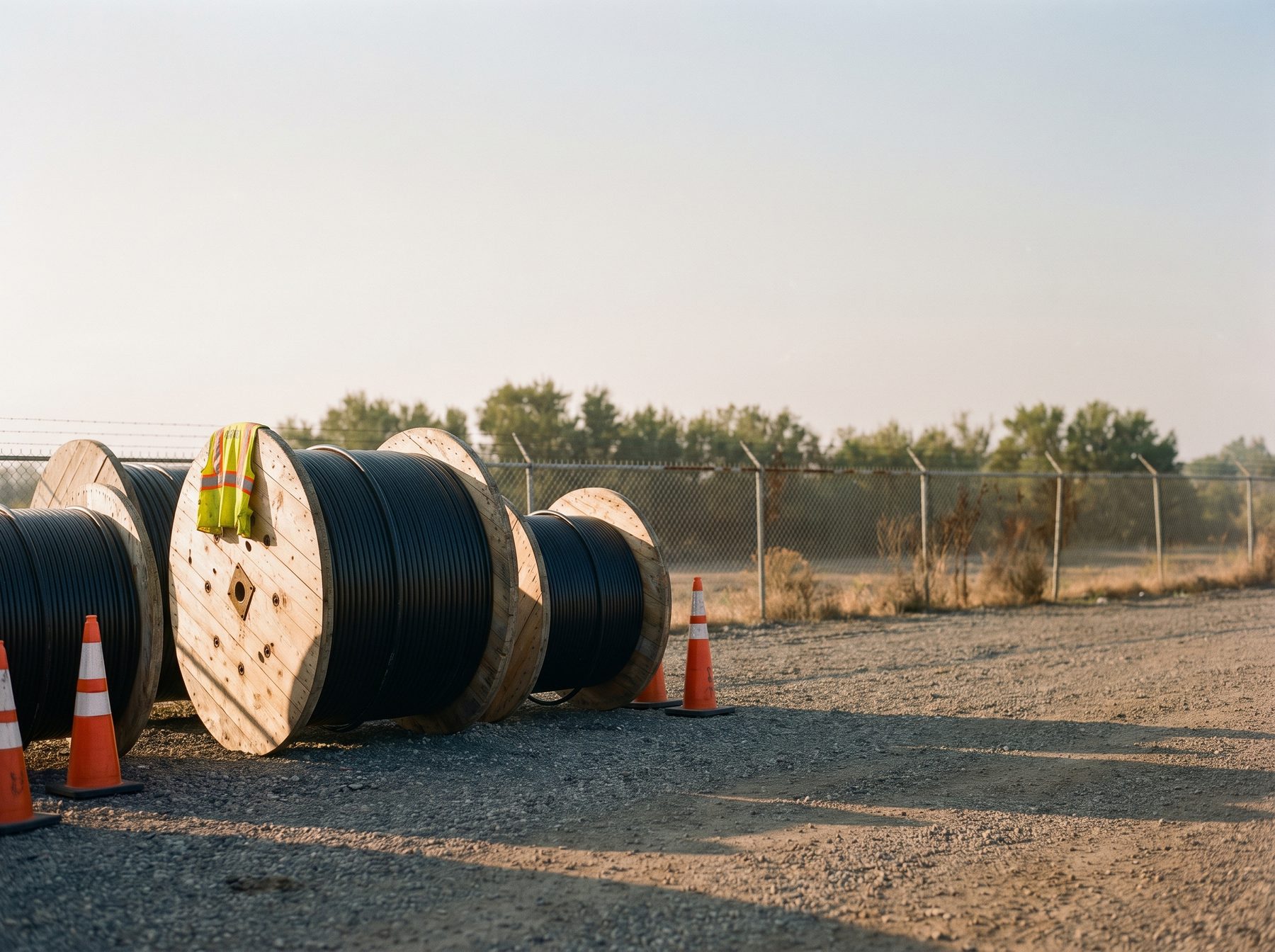
Freight is the hidden line item. Every route above except a dealer pickup puts the reel-moving problem on you. Price it before you decide.
The best price on this page, when it works. A contractor two counties over who needs exactly 4,800 ft of 48 ct next week will pay close to distributor pricing and send their own truck. The catch is the "exactly" — spec, count, footage and timing all have to line up, and you find out by asking around rather than by listing.
If you have that buyer, take it. We would.
Trade schools, lineman training programs, community broadband projects and some nonprofits will take cable, closures and pedestals for training and for builds. You get a deduction rather than cash, and you still have to get it there or find a taker with a dock. Short ends and odd partials that no buyer wants are often perfect for a training program.
The default, and the one route with a cost nobody puts on paper. Reels take yard space. Tags fade in the sun until nobody can price the reel. Jackets take UV. Open ends take water. Reels walk off. And every month the date code gets older, which is a real discount when the material finally does move.
Cable does not spoil — the glass is fine — but the paperwork on the flange is what makes it sellable, and that is what degrades.
Too small to move. One 500 ft partial in a rural ZIP will not clear the freight. Unless it sits on a lane we are already running, a scrap yard or a neighboring contractor serves you better.
You need money this week. We are a trading desk: we place material rather than warehouse it, and we settle with the seller out of the sale. Payment follows placement, not the truck. If cash timing is the whole point, say so at the start and we will tell you straight.
You will use it. If there is a job in the next year that takes that spec, the reel is worth more on your own build than on anyone's offer.
You already have a buyer. Sell it to them.
Same four items for every route on this page. Assemble them once and you can shop the lot to three buyers in an afternoon.
No tags at all? Photograph the flange and the jacket printing anyway. Identifying reels off jacket legend is routine work.
Tag photos and a ZIP. Firm written offer within 24 business hours. Freight booked, paid and insured on our side. Over 50 years in the fiber trade, out of Miami, buying nationwide.
Compramos también — atendemos en español.